Table of Contents
Welcome to DrinkBelgium.com
This is your beer based tourism guide to Belgium.
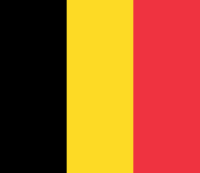 Explore Belgium by Region:
- Flanders - the Dutch speaking Northern region.
Read more about Trappist Beer
Basics of Belgium

Belgium is a country in northwest Europe. With a population of around 12 million (London has 10+ million, Illinois has 12 million people) and an area of 30,689 square km or 11,849 square miles, it has a population density similar to neighbouring Netherlands, India, the Philippines and Japan.
Since becoming an independent country in 1830 Belgium has been a democracy with a constitutional Monarch. Belgium gained independence from The United Kingdom of the Netherlands after a revolution due to religious, cultural and linguistic tensions. Since the 1980s and 1990s steps have been taken to federalise Belgium into three regions, Flanders, Wallonia and the Brussels-Capital Region.
Key figures
| Population | 11,697,557 (2024) |
|---|---|
| Capital | Brussels |
| Government | Federal constitutional monarchy |
| Currency | Euro |
| Languages | Dutch/Flemish, French, German |
| Ethnicities | 65.5% Belgian (2023),34.5% Other |
Regions of Belgium
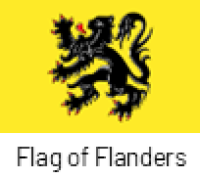
Belgium is divided into 3 distinct areas: Flanders, Wallonia (Wallonie) and Brussels Capital Region. Flanders (Vlaanderen) is the northernmost Dutch speaking region. While having its own culture, it is most similar to the Netherlands . Inhabitants are called Flemings.
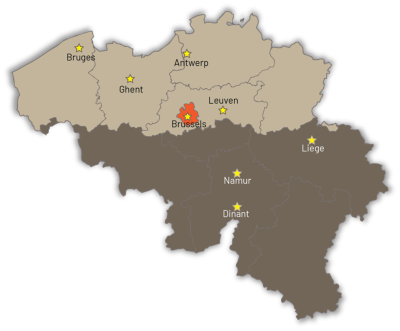
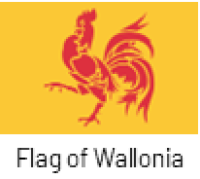
In the South of the country is Wallonia, in this region French is spoken, it shares more cultural similarities with France however also maintains its own distinct culture. People and things from Wallonia are Walloon.
Between the two is the small Brussels Capital Region. It is officially bilingual however French is the main language spoken here. This is a very international region being host to international organisations including various EU agencies and NATO. 76.6% of Brussels’ population is either Belgian with a migration background or non-Belgian.
History
Belgium is a small densely populated country in north-western Europe. Belgium has a long and rich history and has been inhabited since the Stone Age. In Roman times the area straddled the border between Roman and Germanic tribes. For much of history the “Low Countries” were not distinct entities and a wide range of different, tribes, kingdoms and rulers occupied the area of present day Belgium, Luxembourg and the Netherlands- with blurry borders between each and France and Germany. In the 16th and 17th centuries, the Southern provinces of the Low Countries, including present-day Belgium, were ruled by Spain and later the Habsburgs. In 1795, Belgium fell under French control. After the defeat of Napoleon, the north and south were united as part of the United Kingdom of the Netherlands. Until in 1830, when through revolution an independent Belgium was established.
Beer in Belgium
 Ever since the middle ages beer has played a large role in Belgian cultural life. In the beginning beer was mainly produced by monks in monasteries, something that still occurs today. Over time brewers’ guilds were founded and became a larger part of a city’s economy.
Today some estimates for the number of different beers brewed in Belgium are as high as 1500 and there are over 400 breweries, many small family operations and monasteries.
When you order a beer in a Belgian café or bar you will be served a large glass, a little over half way filled with a thick pillowy head. In Belgium a large foamy head is believed to improve the taste and keep in the aroma and leave the drinker with less bloating.
In Belgium a wide range of beers are produced including: lambics, pilsners, pale ales, Flemish dark ales, strong ales, stouts and regional specialties. The uninitiated Belgian beer drinker should take care when drinking Belgian beer as they can often be stronger and more gaseous than beers from other countries.
Ever since the middle ages beer has played a large role in Belgian cultural life. In the beginning beer was mainly produced by monks in monasteries, something that still occurs today. Over time brewers’ guilds were founded and became a larger part of a city’s economy.
Today some estimates for the number of different beers brewed in Belgium are as high as 1500 and there are over 400 breweries, many small family operations and monasteries.
When you order a beer in a Belgian café or bar you will be served a large glass, a little over half way filled with a thick pillowy head. In Belgium a large foamy head is believed to improve the taste and keep in the aroma and leave the drinker with less bloating.
In Belgium a wide range of beers are produced including: lambics, pilsners, pale ales, Flemish dark ales, strong ales, stouts and regional specialties. The uninitiated Belgian beer drinker should take care when drinking Belgian beer as they can often be stronger and more gaseous than beers from other countries.
Lambic
Probably the most famous of Belgian beers, the name refers generically to a beer brewed in the Brussels area and fermented in oak casks with wild yeasts from the air.
Flemish Dark Ales
These the north of the country and similar to English bitter but smoother. These can be very strong, up to about 12%.